
Netherlands & Belgium Solar in 2026: Net Metering, Saldering, and Subsidies
Benelux solar economics depend on net metering rules. Netherlands saldering is phasing down; Belgium varies by region. Here's what to expect in 2026.
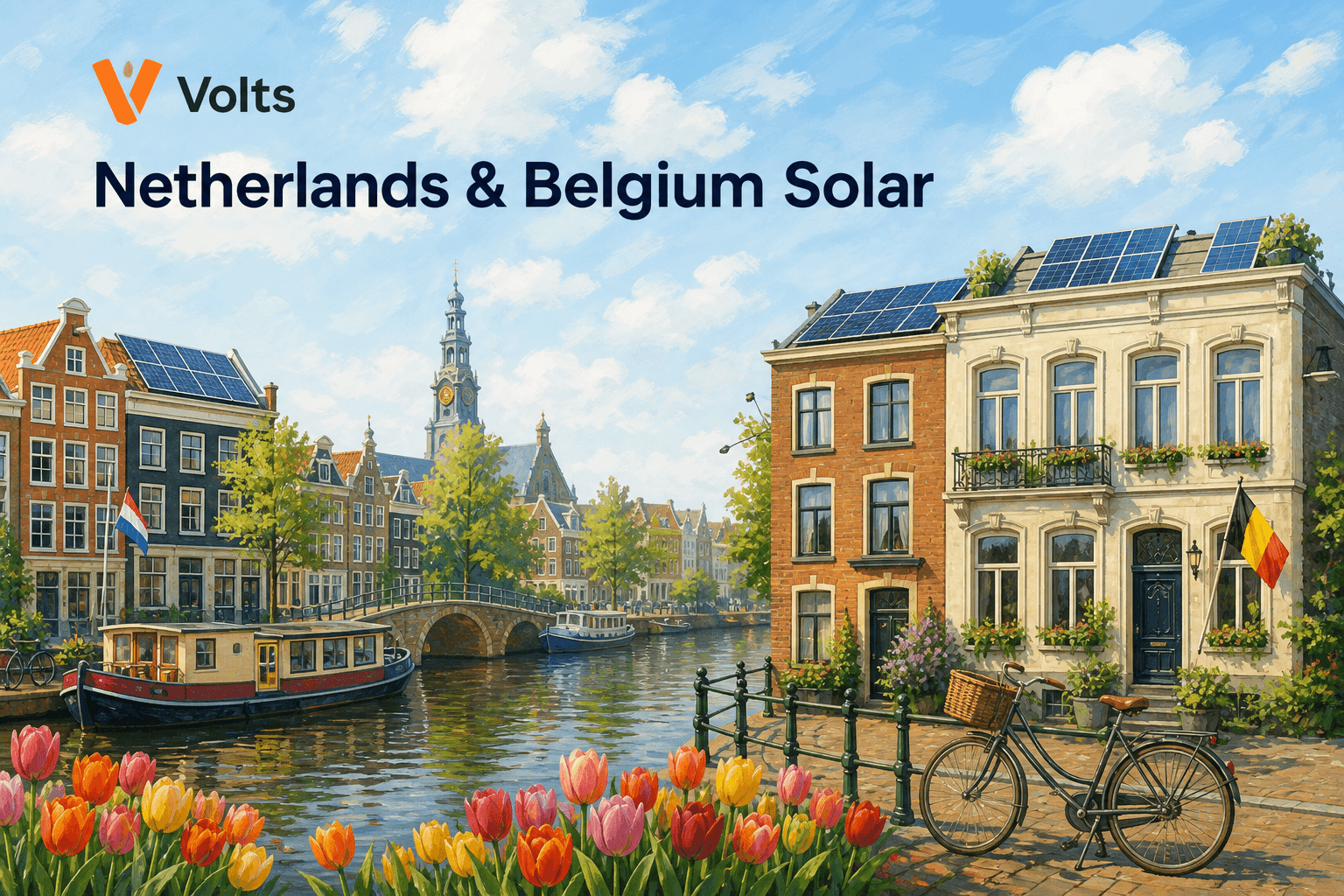
The Netherlands and Belgium are dense, wealthy markets with excellent installer competition — but policy differs sharply. Dutch saldering (net metering) is winding down; Belgian rules split between Flanders, Wallonia, and Brussels.
Key takeaway: In the Netherlands, 2026 quotes should assume less net metering benefit and more self-consumption + battery value.
Netherlands: saldering phase-out
Historically, Dutch homeowners offset annual consumption 1:1 with production (saldering). The phase-down means export is increasingly valued at wholesale, not retail.
| Year trend | Homeowner impact |
|---|---|
| High saldering | Solar-only payback ~5–7 years |
| Reduced saldering | Battery + smart load shifting help |
| Dynamic contracts | Pair solar with flexible supplier |
Typical Dutch install: 6–10 kWp, €7,000–€12,000. Flat roofs common — check ballast vs penetration mounting.
Belgium: regional differences
| Region | Policy flavor |
|---|---|
| Flanders | Premium / prosumer tariff structures — verify current kWh rates |
| Wallonia | Different incentive landscape — check CWaPE updates |
| Brussels | Urban density — roof space and co-ownership issues |
Always confirm prosumer fee (capacity tariff) on your DSO bill — it affects payback.
Shared Benelux checklist
- Installer certification (e.g. PV label where applicable)
- Grid operator approval before switch-on
- Fire safety setbacks on flat roofs
- VAT / regional subsidy eligibility on quote date
Compare Benelux quotes fairly
Same kWp, same orientation, same assumed self-consumption %. Volts connects you with verified installers for free quotes — one request, multiple proposals, no cold calls.
Ready to see your numbers?
Get up to 3 free quotes from verified solar installers, 100% free for homeowners.
Calculate My Savings